
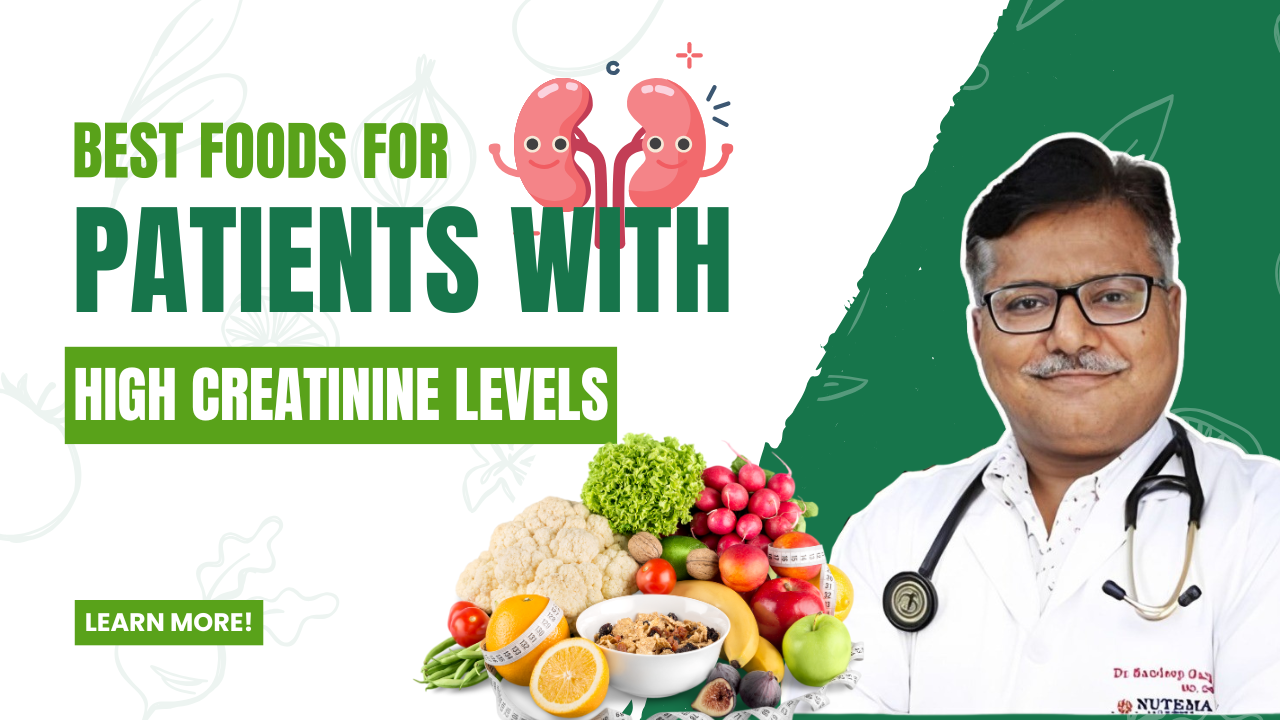
When creatinine levels are high, food choices become an important part of protecting kidney health. The right diet cannot cure kidney disease on its own, but it can reduce strain on the kidneys, help control blood pressure, and support better overall energy and nutrition.
Why diet matters when creatinine is high?
Creatinine is a waste product made by muscles and cleared by the kidneys. When kidney function declines, creatinine rises because the kidneys are not filtering waste efficiently. That is why people with high creatinine are often advised to follow a kidney-friendly diet that limits excess salt, phosphorus, potassium, and unnecessary protein loads.
The goal is not to starve the body. It is to choose the best food for kidney health so the kidneys do less overtime work while the patient still gets enough calories and nutrients.
Best foods for patients with high creatinine levels
Here are some of the Best Foods for Patients with High Creatinine Levels that are commonly recommended in kidney-friendly diets:
1. Low-potassium fruits
Apples, berries, grapes, pears, and pineapple are generally gentle choices because they are lower in potassium than many tropical fruits. These fruits can satisfy sweet cravings without overloading the kidneys.
2. Low-potassium vegetables
Cauliflower, cabbage, bottle gourd, ridge gourd, cucumber, capsicum, and pumpkin are often used in kidney-friendly meal plans. They are light on the kidneys and can be cooked with minimal oil and salt.
3. Refined grains in controlled portions
White rice, suji, poha, and soft phulkas may be better tolerated than heavy, highly processed meals when creatinine is high. Portion control matters because even kidney-friendly foods can become difficult to manage in large amounts.
4. Moong dal and light pulses
Moong dal is often considered one of the easier dals to digest and can be used in thin soups or khichdi. It provides some protein while being easier to tolerate than heavier protein sources.
5. Healthy fats in moderation
A small amount of olive oil, groundnut oil, or home-cooked fat is usually better than fried foods or bakery snacks. Calories are important too, especially if appetite is poor.
6. Homemade low-salt foods
Freshly cooked meals are usually the safest option because they allow you to control sodium and additives. Simple Indian meals made at home are often better than packaged or restaurant foods.
Foods that should be limited
Certain foods can worsen kidney strain when creatinine is high. These include:
- Processed and packaged snacks.
- Pickles, chips, instant noodles, and fast food.
- Too much red meat, chicken, fish, eggs, or protein supplements if your doctor has told you to restrict protein.
- High-potassium foods such as bananas, oranges, potatoes, tomatoes, and coconut water in some patients.
- Very salty foods that raise blood pressure and fluid retention.
The exact restrictions depend on kidney function, urine output, diabetes status, and whether the patient is on dialysis.
How much protein is enough?
This is one of the most important questions for people with high creatinine. Too much protein can increase waste production, but too little can cause weakness and muscle loss. Non-dialysis kidney patients are often advised to keep protein moderate, while dialysis patients may need more protein because dialysis causes protein loss.
That is why a one-size-fits-all diet does not work. The right kidney health plan should be personalized by a nephrologist or renal dietitian.
Hydration and kidney health
Water intake should also be individualized. Some people with high creatinine need normal hydration, while others with swelling, heart problems, or advanced kidney disease may need fluid limits. Drinking too much water when the kidneys cannot clear it well may worsen swelling or blood pressure.
So the safest advice is to follow the exact water intake plan given by your doctor.
Contact Dr. Sandeep Kumar Garg Today!
📞 For Appointments: +91 9927600666
📞 For Enquiries: +91 9675600666