
Common myths about water and kidney health
- Myth 1: Everyone must drink 8 glasses of water daily.
Medical reviews show the “8‑glass rule” has no strong scientific basis and was never meant as a one‑size‑fits‑all prescription. Total fluid needs vary with age, weight, activity, climate, and diet, and much of your daily water comes from food, tea, coffee, and other beverages. - Myth 2: More water always means healthier kidneys.
Healthy kidneys already filter around 180–190 litres of blood a day and do not work “better” just because you force more water; extra water typically only increases urine volume. Over‑hydration can dilute blood sodium and, in extreme cases, cause dangerous hyponatraemia and strain in people with heart or kidney disease. - Myth 3: Clear urine is the goal for everyone.
Pale yellow urine generally indicates good hydration, but completely water‑clear urine all day may simply mean you are drinking more than your body needs. Hydration should be guided by thirst, urine colour, and medical advice, not by “competition drinking.”
Medical facts about water intake for kidneys
Specialists agree that good hydration is vital for kidney health, but “good” means enough not excessive. Most healthy adults do well with roughly 1.5–2.5 litres of total fluids per day (from water, beverages, and high‑water foods), with higher needs in hot weather or heavy exercise.
Key medical facts:
- Listening to your body’s thirst signal and watching for pale‑yellow urine works well for most people without kidney or heart disease.
- Aiming for around 2–3 litres of total fluid daily is a reasonable general range, but exact needs should be individualised.
- Evidence suggests that consistent adequate water intake lowers the risk of kidney stones and may support overall kidney health, but simply “over‑drinking” does not reverse chronic kidney disease.
For people with existing CKD, heart failure, or on dialysis, water and fluid limits must be personalised by a nephrologist; in these cases, “more water” can be harmful.
Water intake for kidneys: who needs to be careful?
Correct hydration strategy depends on your health status.
- Healthy individuals: Drink to thirst, adjust intake in heat or exercise, and use urine colour as a guide.
- Kidney stone formers: Consistent higher fluid intake spread throughout the day helps dilute urine and can reduce stone recurrence risk.
- People with CKD or heart disease: Often need controlled fluid intake to avoid swelling, breathlessness, and high blood pressure, strictly as per doctor’s advice.
This is where expert input from a kidney specialist in NCR becomes crucial to avoid both dehydration and fluid overload.
Important Kidney Health tests you should know
Because poor kidney health is often silent, lab tests matter more than just how much water you drink.
Core Kidney Health tests include:
- Serum creatinine and eGFR: Show how well your kidneys are filtering waste; a persistently low eGFR signals chronic kidney disease.
- Blood urea nitrogen (BUN) and electrolytes: Assess waste removal and balance of sodium, potassium, and bicarbonate, which can shift in both dehydration and fluid overload.
- Urine Albumin‑to‑Creatinine Ratio (uACR): Detects early “micro” protein leak from the kidneys, often before eGFR drops, especially in people with diabetes or hypertension.
- Urinalysis: Screens for blood, protein, or infection that can affect kidney health.
- Renal ultrasound (when needed): Checks kidney size, structure, stones, or obstruction.
Doing these tests at recommended intervals, especially if you have risk factors, gives a far clearer picture of kidney health than following generic water myths.
Why consult the best nephrologist in Delhi NCR?
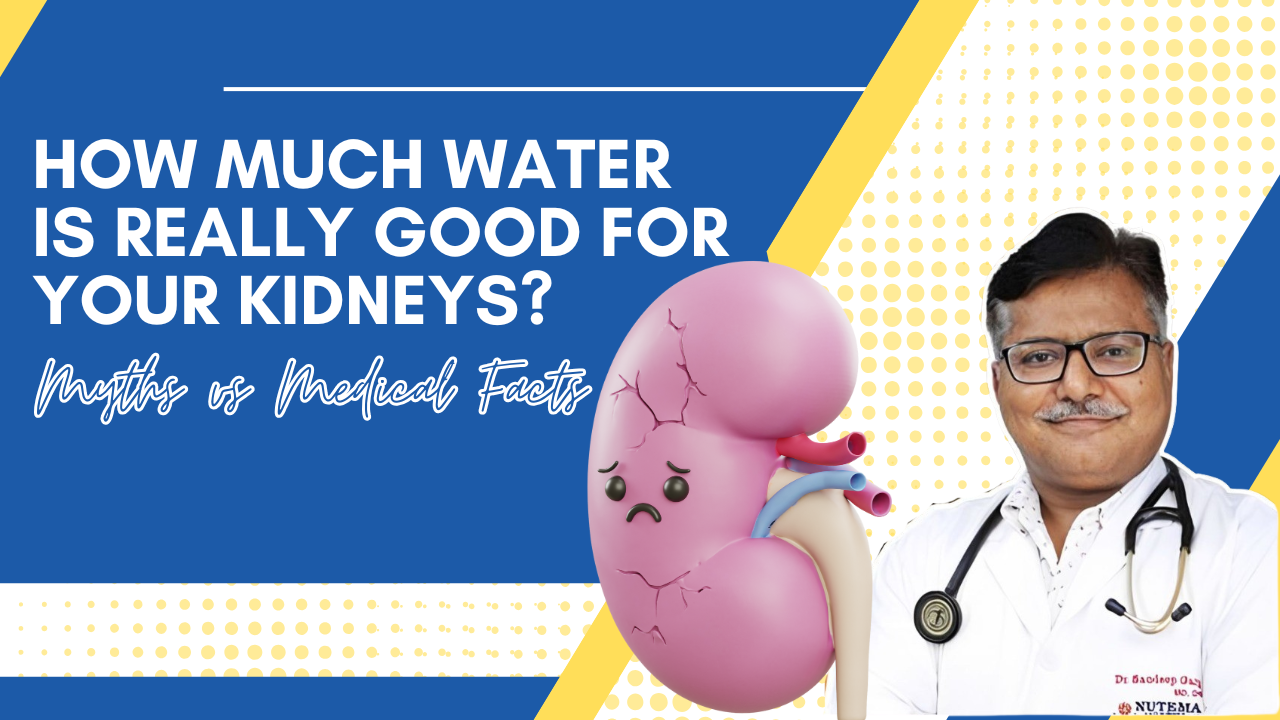
Hydration advice must match your lab reports, blood pressure, medications, and lifestyle. Dr. Sandeep Kumar Garg is a senior DM‑trained nephrologist and Director of Nephrology at Nutema Hospital, Meerut, with nearly three decades of experience in kidney diseases, dialysis, and renal transplantation, and more than 150–250 kidney transplants to his credit across Meerut and NCR. Widely regarded as one of the best nephrologist in Delhi NCR region, he helps patients understand safe water intake for kidneys, interpret Kidney Health tests, and plan long‑term protection strategies.
Conclusion
When it comes to water and kidney health, the real Myths vs Medical Facts are clear: your kidneys need the right amount of fluid, not blindly “8 glasses” or extreme over‑drinking, and personalised guidance plus proper Kidney Health tests matter far more than social‑media tips.
Get a kidney health check-up now.
Contact Dr. Sandeep Kumar Garg Today!
📞 For Appointments: +91 9927600666 | 📞 For Enquiries: +91 9675600666
Protect your kidneys. Breathe smart. Live well.