
Alcohol can harm kidney health in ways that are easy to miss at first, especially when drinking becomes regular or heavy. The alcohol impact on kidneys is often indirect at the start, but over time it can contribute to dehydration, high blood pressure, liver strain, electrolyte imbalance, and worsening kidney function.
Why alcohol affects the kidneys?
Your kidneys filter waste, balance fluids, regulate blood pressure, and help control electrolytes. Alcohol can interfere with all of these jobs by making you pass more urine, dehydrate your body, raise blood pressure, and increase the risk of long-term kidney damage. If you already have diabetes, hypertension, or early kidney disease, the alcohol impact on kidneys can be much more serious.
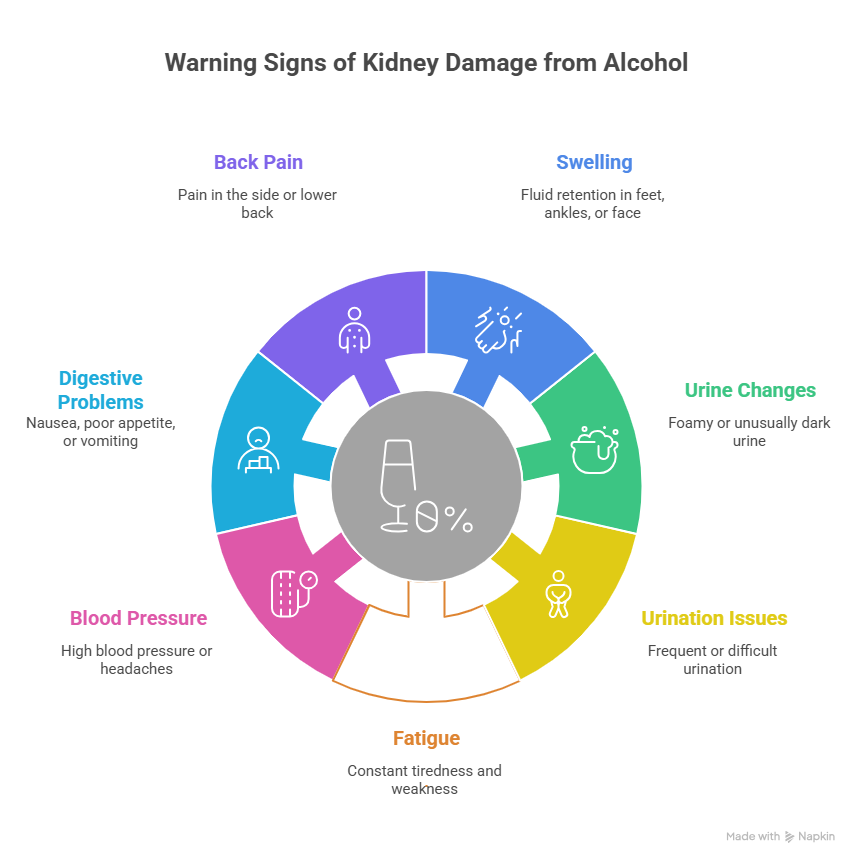
1. Swelling in feet, ankles, or face
One of the clearest warning signs is swelling, also called edema. When kidneys are struggling, they cannot remove extra salt and water efficiently, so fluid begins to collect in the body. Alcohol can worsen this problem by disturbing fluid balance and blood pressure control.
If swelling appears regularly after drinking, it should not be ignored. This may also point to heart, liver, or kidney trouble and needs medical assessment from a kidney specialist in NCR.
2. Foamy or unusually dark urine
Changes in urine are often an early clue that kidney health is suffering. Foamy urine may suggest protein leakage, while darker urine can point to dehydration from alcohol use. Both are important signs because healthy kidneys should keep protein in the blood and maintain proper hydration balance.
If your urine stays dark even when you drink water, or if it becomes foamy repeatedly, it is worth getting a kidney health check.
3. Frequent urination or trouble passing urine
Alcohol increases urine production because it suppresses a hormone that helps the body retain water. At first, this may look like simple dehydration, but over time it can signal strain on the urinary system. Some people also notice urgency, weak urine flow, or reduced urine output later in the day.
These changes can be connected to kidney stress, prostate issues, or bladder problems. In long-term cases, they may also point toward worsening kidney function.
4. Constant fatigue and weakness
When kidneys are damaged, waste products build up in the body and can make you feel tired, sluggish, or mentally slow. Alcohol itself can also disrupt sleep and worsen fatigue, which makes the problem harder to notice. If you feel exhausted even after resting, and this happens more often when you drink, your kidneys may be under pressure.
Fatigue is one of the most commonly overlooked symptoms of kidney disease, so it should never be dismissed as “just stress” or “just alcohol.”
5. High blood pressure or headaches
Alcohol is known to raise blood pressure, especially with regular or heavy use. This matters because high blood pressure is both a cause and a consequence of kidney damage. Once kidney function begins to decline, blood pressure may rise further, creating a dangerous cycle.
Frequent headaches, dizziness, or readings that stay high after drinking can be an early warning that kidney health is being affected. Long-term uncontrolled blood pressure can also lead to kidney shrinkage, making Kidneys Shrink treatment more difficult later.
6. Nausea, poor appetite, or vomiting
As kidney function worsens, waste products can build up and affect digestion. This may lead to nausea, reduced appetite, or vomiting. Alcohol can make this worse by irritating the stomach, stressing the liver, and interfering with hydration and electrolyte balance.
If these symptoms happen repeatedly after alcohol intake, they may be more than a simple hangover. Persistent digestive symptoms along with swelling or urine changes need evaluation by the best nephrologist in Delhi NCR.
7. Back pain or flank discomfort
Pain in the side or lower back does not always mean kidney disease, but it can be a warning sign. In some cases, alcohol may aggravate dehydration or kidney stones, both of which can cause discomfort. If the pain is associated with fever, burning urination, blood in urine, or reduced urine output, the problem may be more serious.
Kidney-related pain should be checked early, especially if you already have diabetes, hypertension, or a history of kidney disease.
Who is at higher risk?
Some people are more vulnerable to the alcohol impact on kidneys than others. Risk is higher if you have:
- Diabetes.
- High blood pressure.
- A family history of kidney disease.
- Existing kidney problems.
- Liver disease.
- Frequent dehydration.
- Heavy or binge drinking habits.
For these individuals, even moderate alcohol use can be more harmful than expected.
What tests can detect kidney damage?
If you have warning signs, doctors usually recommend basic kidney checks such as serum creatinine, eGFR, urine routine, and urine protein testing. These tests help show whether kidney function is declining or whether there is protein leakage, infection, or dehydration-related stress. In some cases, an ultrasound may also be needed to look for kidney size changes, stones, or obstruction.
These are simple but important steps for protecting kidney health before damage becomes permanent.
How to protect your kidneys
The best step is to reduce alcohol use or stop completely if your doctor advises it. Along with that, stay hydrated, keep blood pressure and sugar controlled, avoid unnecessary painkillers, and get regular kidney testing if you are at risk. If your kidneys have already become small or damaged, early treatment can slow further decline and may help with Kidneys Shrink treatment planning.
Conclusion
Alcohol does not damage every person in the same way, but the alcohol impact on kidneys can become serious when warning signs are ignored. Protecting kidney health means noticing symptoms early, cutting back on alcohol, and getting expert care before kidney damage progresses.
Contact Dr. Sandeep Kumar Garg Today!
📞 For Appointments: +91 9927600666 📞 For Enquiries: +91 9675600666